about
This project, this collection of dish towels was an idea born of a woman whose restless mind wondered about the old saying “It takes a village to raise a child.”
Where are the villages? How do we manage the expectations of family and community? Where do we find support? Who do we turn to when we need assistance? These tea towels bear witness to the circumstances of each experience… and that of our times.
If this experience resonates with you, and you have a dish towel that you would like to share, please go to tell us Your Story and upload your story and images.
archive
This collection is a gallery dedicated to showcasing tea towels. Each cloth has its own personality and character, its own drama and its own story or perhaps stories to tell. They embody the invisible hours of caretaking often given without any expectation of recognition or reward.
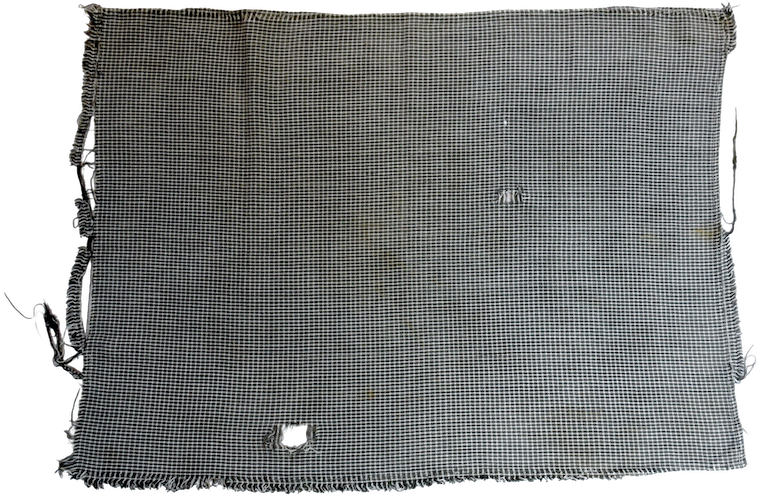
This is my dishtowel. I bought it many years ago, when we married and the kitchen was white (1986). That was in our old house in West Roxbury, MA. The towel is older than Aldi (my oldest son), since moving to Wayland.
It has dutifully served our family needs. I have tried to dispose of it without success. It always reappears. It has many lives.
— Gunta K.
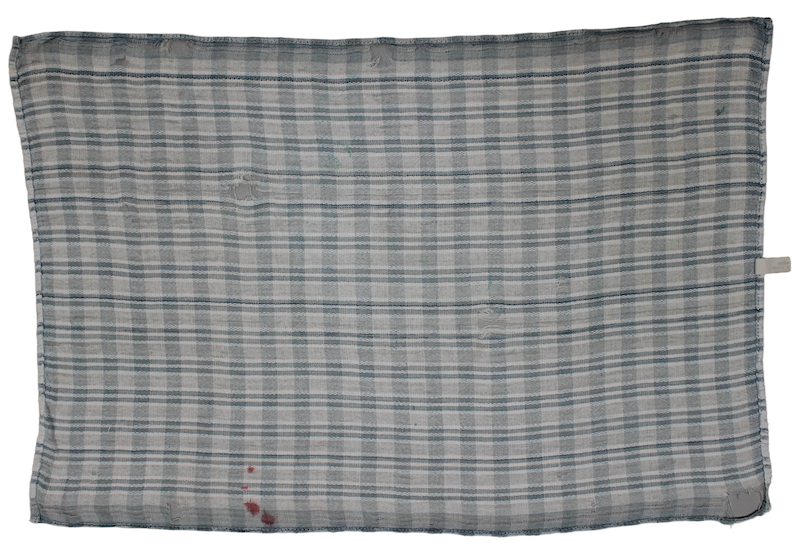
Well here it is, finally, the mother of all old towels. I say that very lightheartedly, because this towel has been with me (a man) since my mother and father packed it with my other necessities on my ‘Sprīdītis’ journey to Louisiana in 1981. I can still visualize the hot bread, fresh out of the oven, mom would cover with this towel, as she set the aroma filled loaf on the counter. Every now and then my memory recalls the aroma… Never could seem to separate myself from this towel and if a purpose for its maturity is to stretch and make a final connection between Wayland and, wherever, then let it be so. I formally bequeath this towel to you sister.
— Rolands A.
My brother refers to Sprīdītis, a mythical character from a Latvian folk tale written by Anna Brigadere. Sprīdītis is the youngest of the three brothers who leaves his home and goes on a journey to make his fortune. He is considered the fool, the unlearned, the unknowing one, yet he masters all of the trials set before him by various encounters with larger and more powerful mythical characters. He returns successfully to his home having mastered all of life’s difficulties.
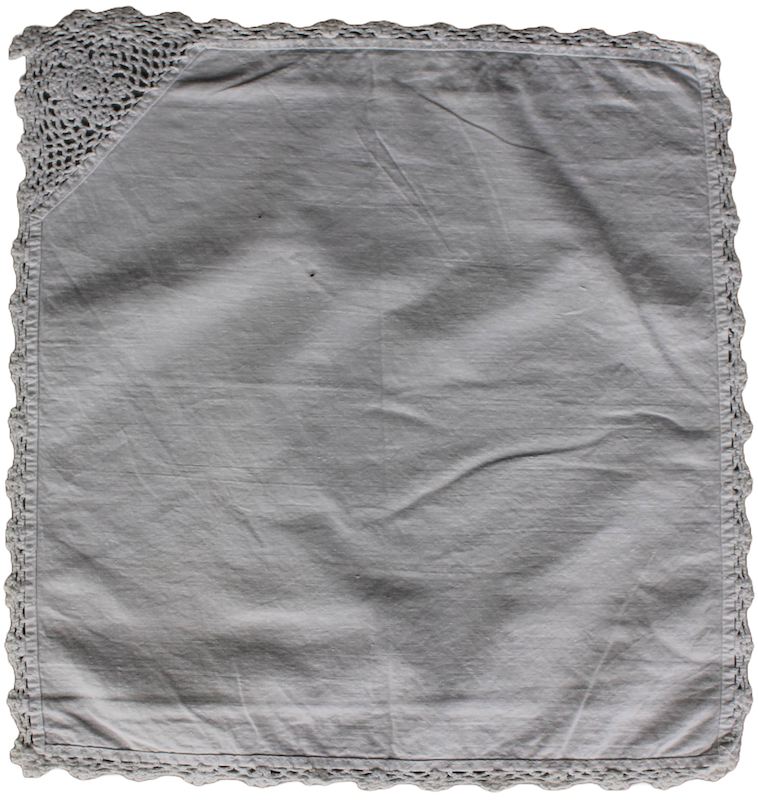


This hand embroidered cloth is from my grandmother.
— Olga A.
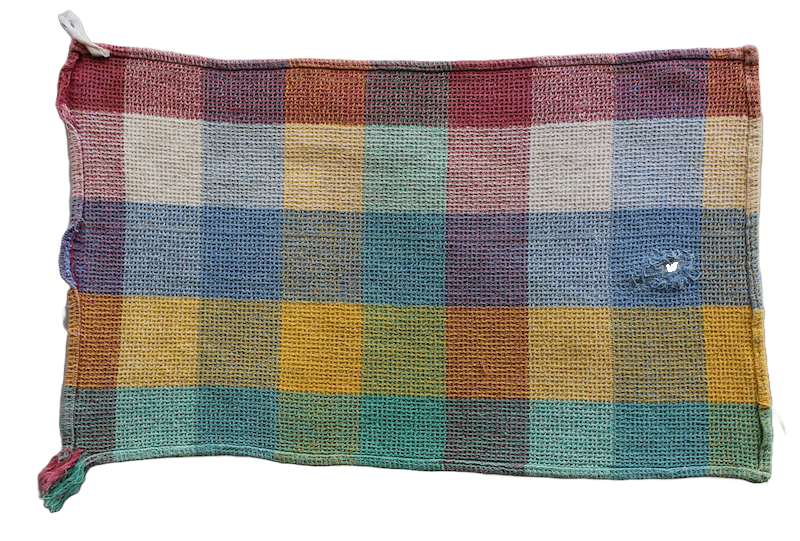
I bought the towel at the Dansk outlet in Kittery, Maine, on one of the many trips I made up to my vacation house there on Frye Island, Sebago Lake, town of Raymond, Maine. (That’s the house I sold for RISD tuition.)
— Elizabeth R.
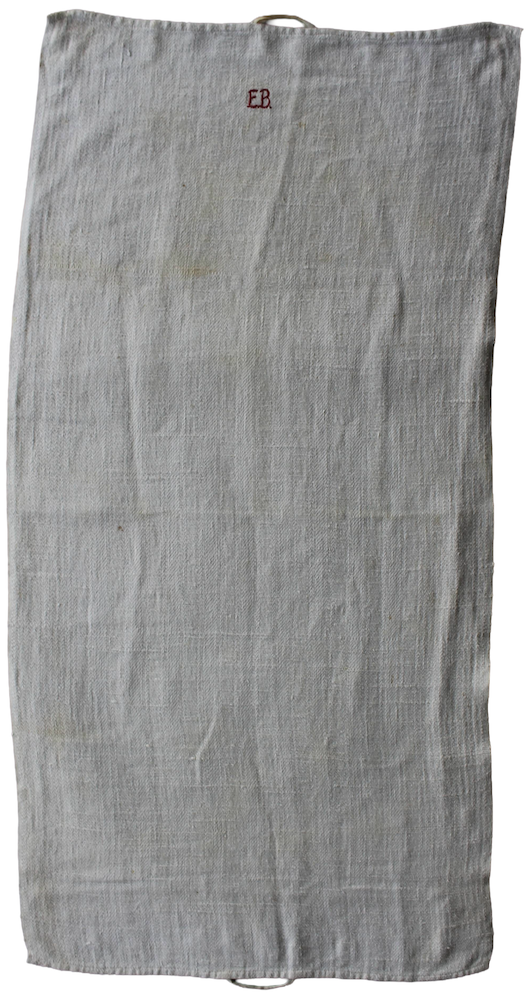
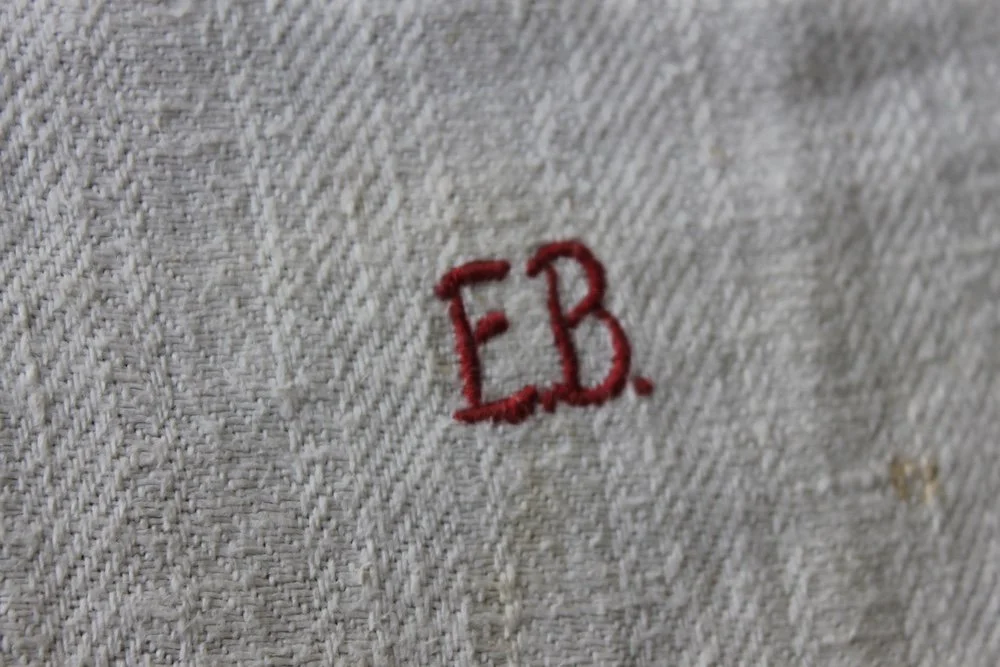
This towel belonged to my husband Thomas’ German grandmother. Her initials E.B. are embroidered with red thread, typeface unknown.
— Lucy H.
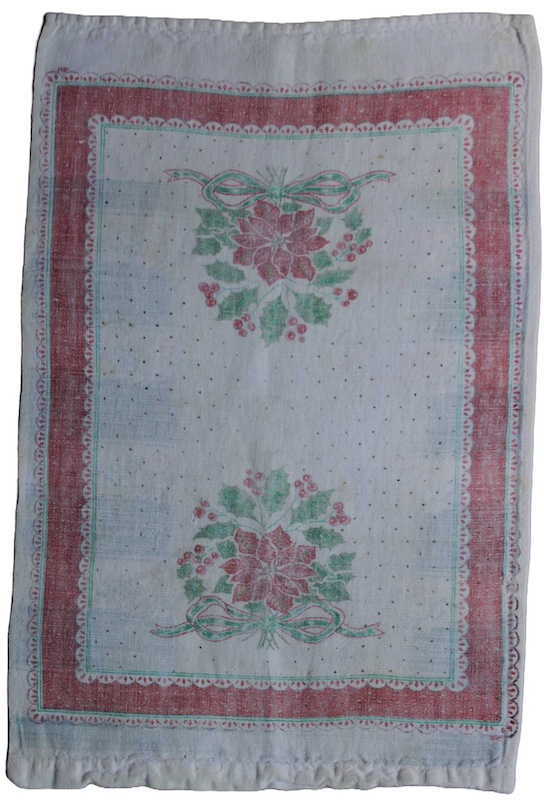
I am sorry this took so long. I guess my dishtowels are not that exciting.
Several years ago, after my mother saw me run out of dry dishtowels, she decided to give me a large supply. She went to a flea market and bought dozens of towels.
They had been produced for an occasion that had passed by (past holidays, calendars for years that had passed, long ago events, etc.) and were very inexpensive. They’re not very attractive, but they do dry dishes. I hope your project goes well.
— Sally L.
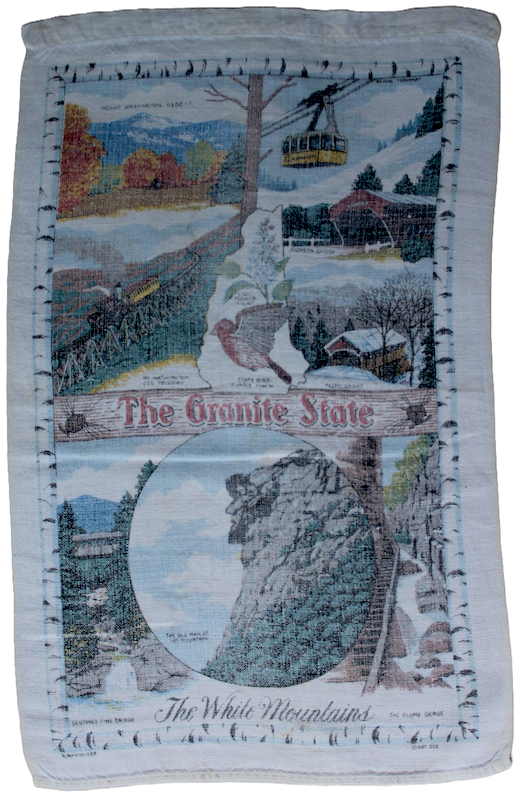
Years ago when we lived more frugally, Bill, my husband, would take our four children up to New Hampshire for Labor Day. It was my weekend off.
My birthday is August 30th. This dishtowel was a gift from my youngest son David, then five years old.
He was touched that I had saved it all these years.
Life was different back then…
I’m not sure how my children are going to balance career and family.
— Marty M.
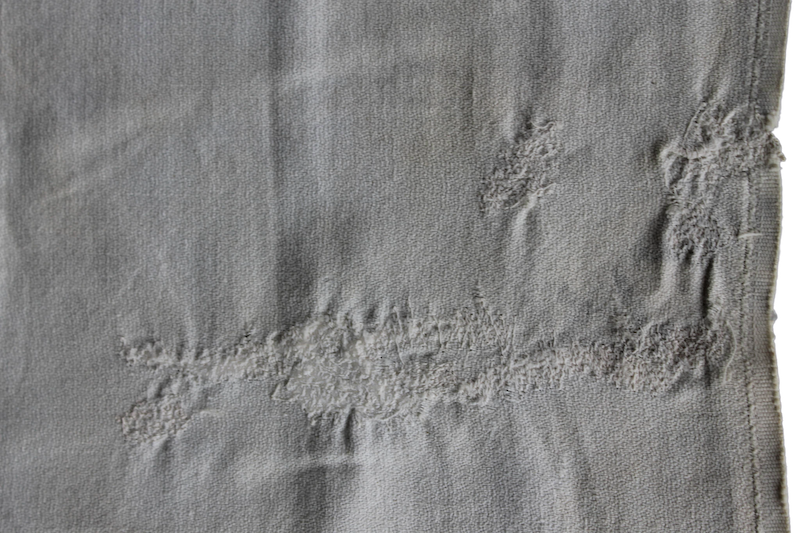
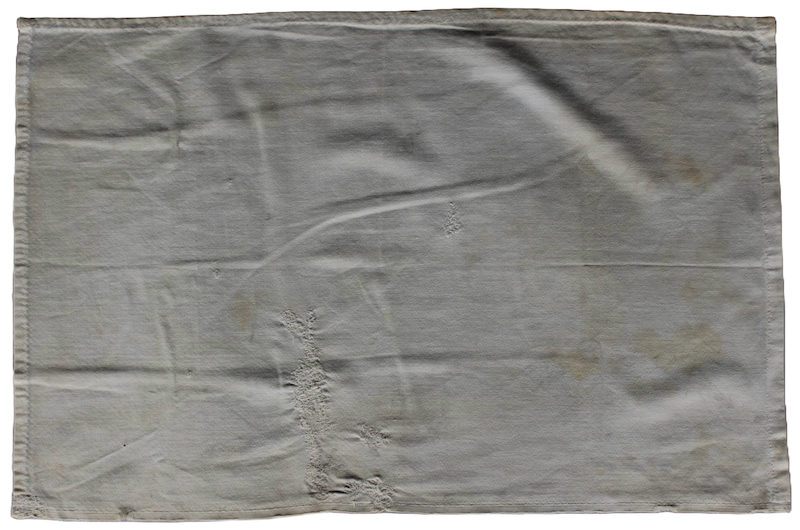
Latvian Homemaker
— Detroit, MI
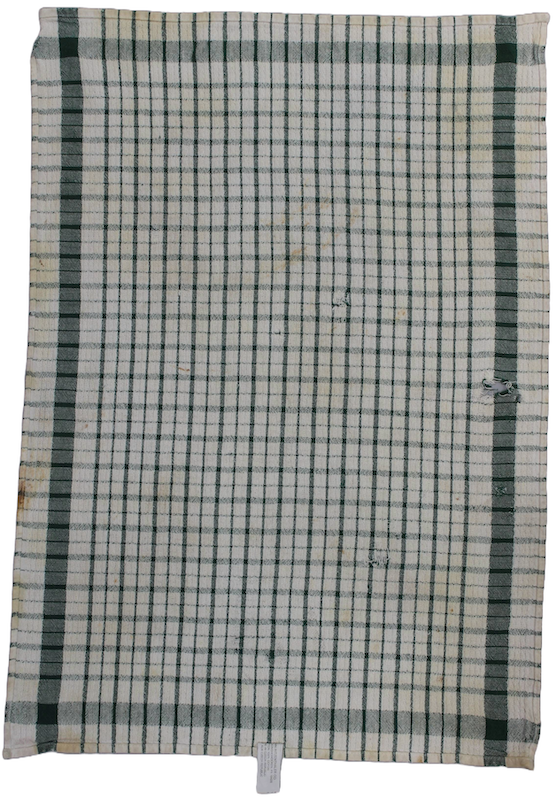
This dishtowel has been with me since I moved into my own studio apartment after college in 1989. I bought it because it matched my kitchenette and it looked nice. Truthfully, however, at that point it received little or no use. The dishtowel found its way into my boxes when I moved down to Villanova to go to law school. It was probably one of ten things I owned at that point—a bed, two dishes, a television, a towel, etc. While in law school, the dish towel got slightly more use than it did in my Winthrop studio apartment. It didn’t look as nice in my new kitchen. It didn’t match anything and it had a few stains. Nevertheless, buying a new dish towel was my last priority, then. When I had Douglas, during my last year of law school, I found many uses for it. It cleaned up formula and ‘spit-up’ and even doubled as an oven mitt more than once. It soon started to look ragged, but the more used it became, the easier it was to grab and clean up yet another disaster.
Now this is a well-traveled dishtowel! After law school, it moved back to Boston with me and then up to Maine, where we spent three years together. It is amazing, really, that it made all of the moves! Most of my belongings came and went during that very busy time… The dishtowel did get very little use in Maine since we always ate in a cafeteria and there was little to no kitchen action. It looked horrible at that point, however, I really could not have cared less. I was unhappy in Maine—living in such a rural setting, and I disliked my job. Nothing got much attention in terms of making our home look good. The towel made the move back to Boston (to Watertown) and finally to Wayland. Since its worst days in Maine, it has had a facelift. Doug worked his ‘bleach magic’ and the dishtowel is ready for another round! It will welcome our third child and gets daily use from my daughter Isabelle, who has at least two to three spill accidents a day. It still doubles as an oven mitt and I suspect it will be around for a long time. Now that I’ve actually thought about this towel as something other than a rag, I realize that it has been with me through many changes and stages of my life. Nevertheless it could use a rest!
— Paula L.
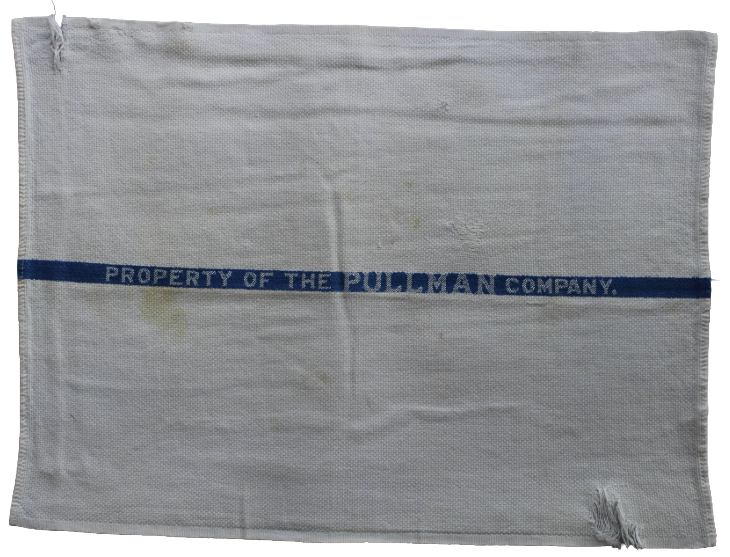
My father brought these home, we had several of them. I remember him with his uniform— his white coat and his black cap. I remember that a few times when we were on the train he would be working at the same time.
— Velma J.P.
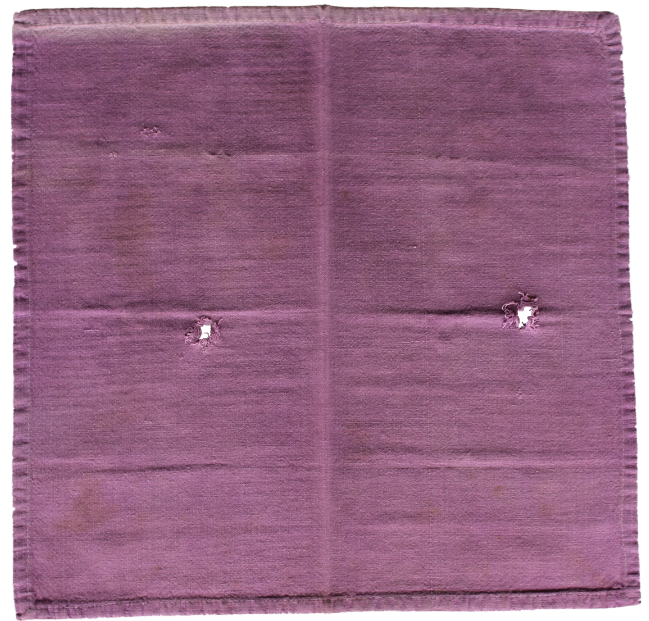
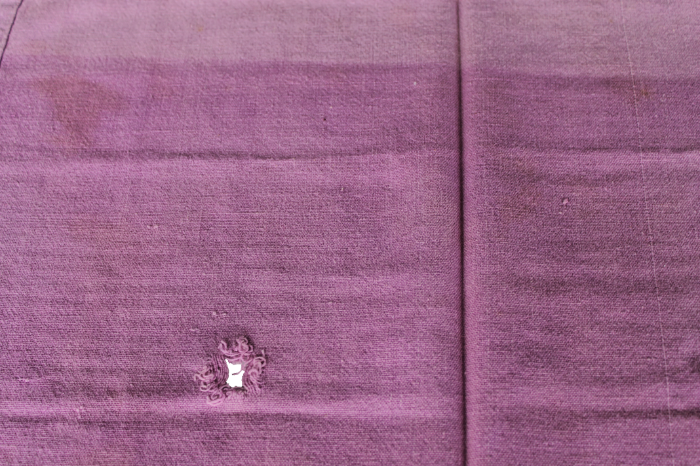
I lived in Kansas City, Missouri when I was an art student at the Kansas City Art Institute from 1994–1997. I used to make focaccia all the time for dinner. One night I left a newly cooked focaccia on the chopping block. I covered it with the dish towel, because it was still hot from the oven and I didn’t want to suffocate it with saran wrap. I thought the cotton dish towel would let it breathe overnight. When I awoke in the morning, a mouse had burrowed through two layers of cloth into the focaccia below and ate a hole in it.
— Donna M.
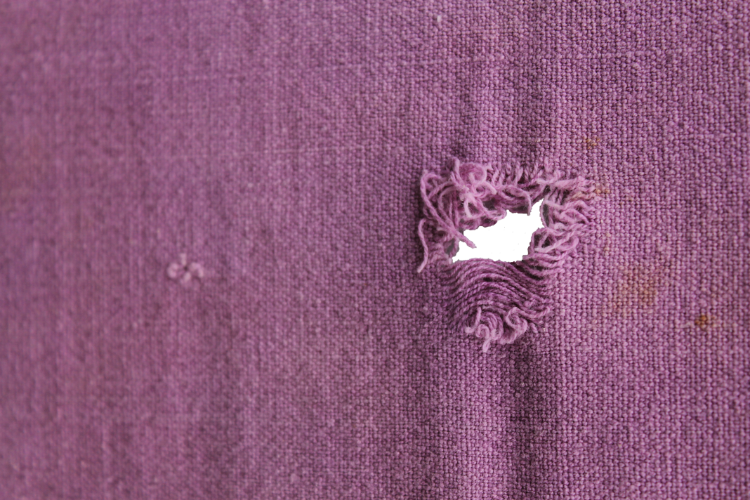
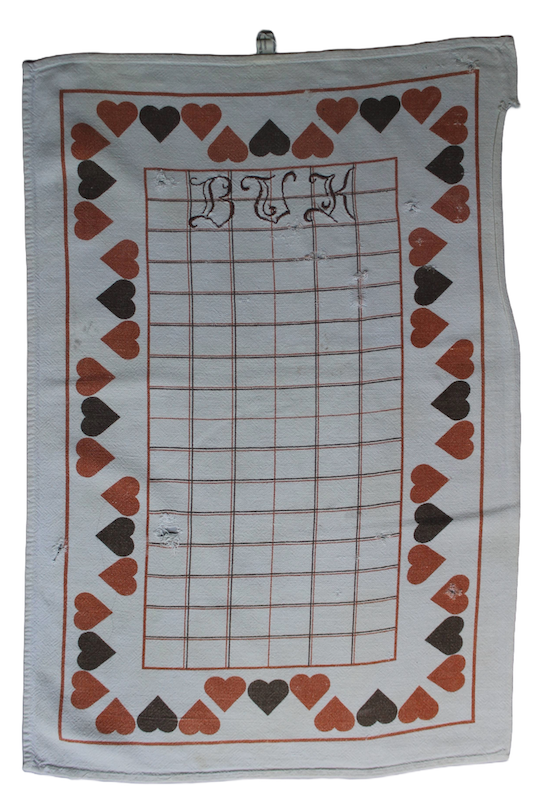
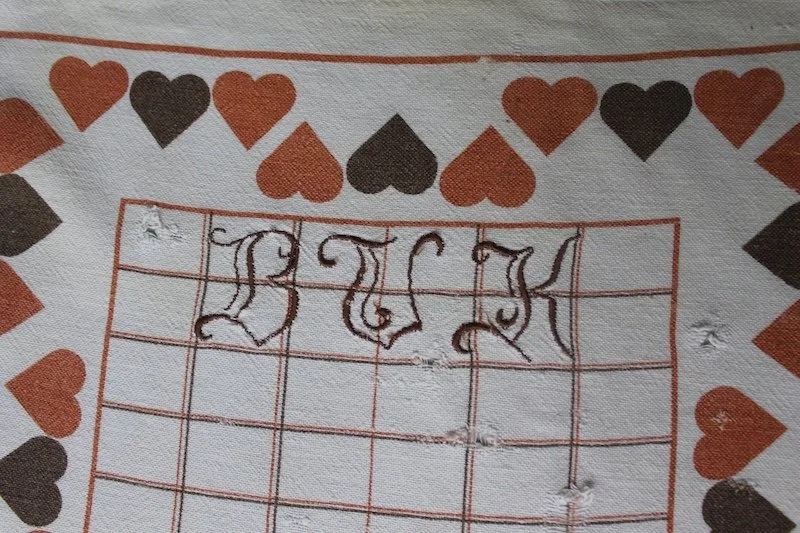
I thought of you when I found this sorry looking dish towel, especially its interesting monograph… lovely isn’t it? I felt that it might fit your project. We’ve just moved back to Iceland, living in an apartment. It’s been ten years since we left…
— Almadis K., Akureyri, Iceland
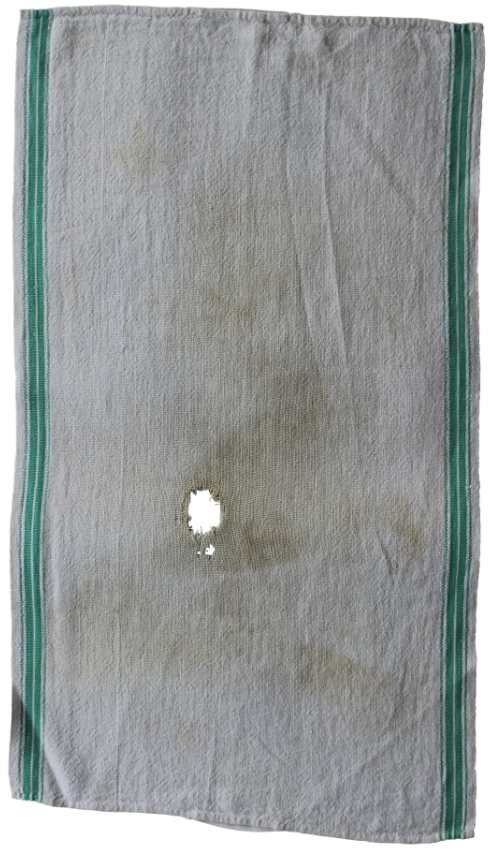
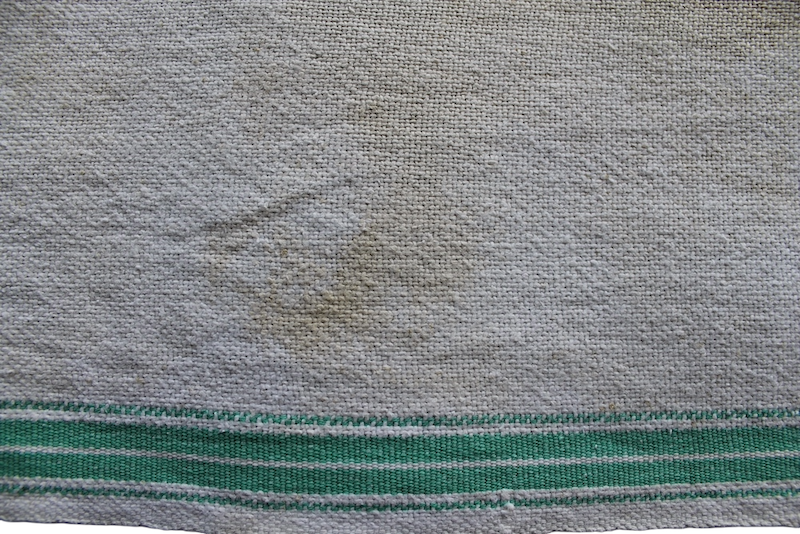
This towel is from Molly S. and was accompanied by this quote by Mary Oliver: “You are young. So you know everything. You leap into the boat and begin rowing. But, listen to me. I talk directly to your soul. Listen to me. Lift the oars from the water, let your arms rest, and let your heart, and heart’s little intelligence, and listen to me. There is life without love. It is not worth a bent penny, or a scuffed shoe. It is not worth the body of a dead dog nine days unburied. When you hear, a mile away and still out of sight, the churn of the water as it begins to swirl and roll, fretting around the sharp rocks—when you feel the mist on your mouth and sense ahead the embattlement, the long falls plunging and steaming—then row, row for your life toward it.”
— Molly S.
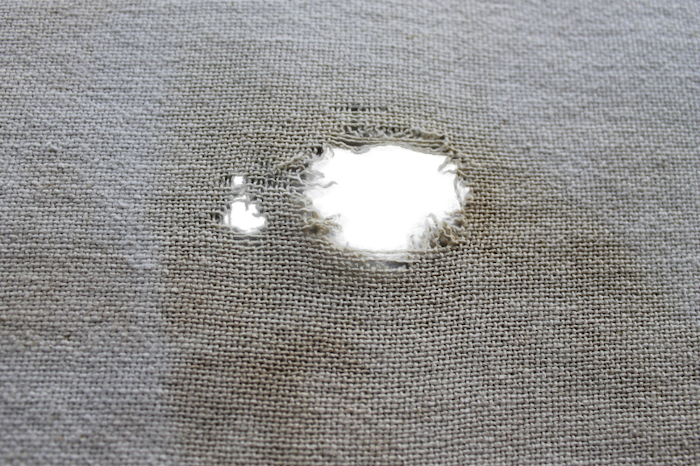
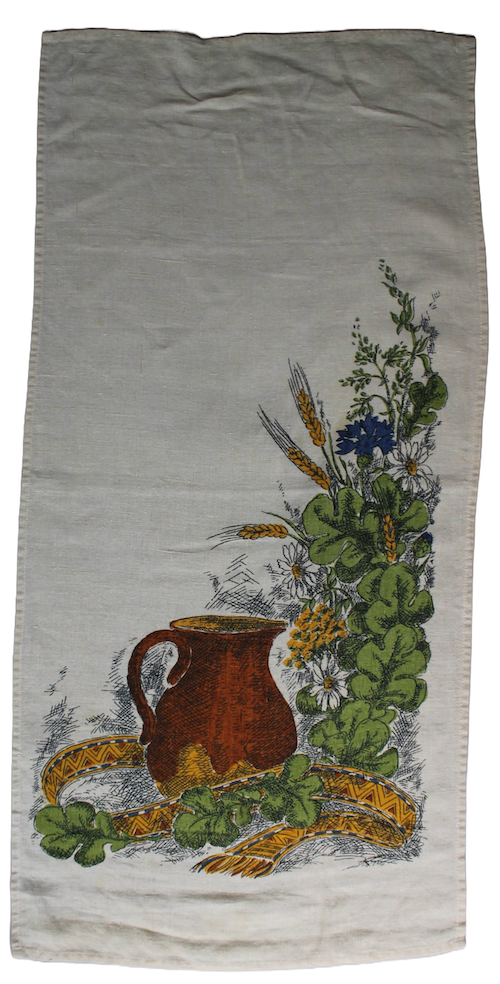
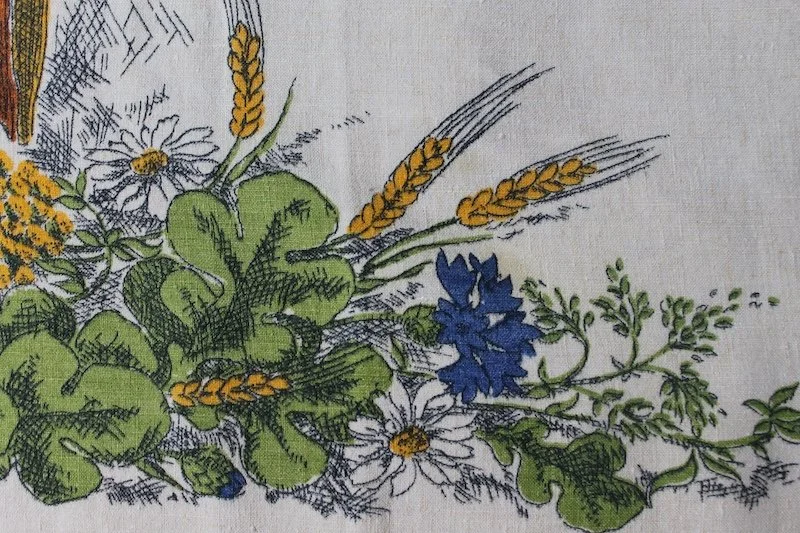
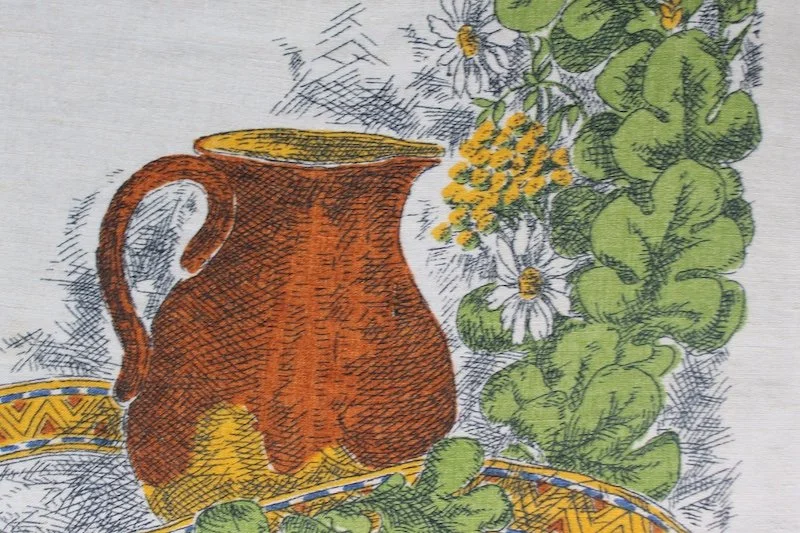
This dish towel came from Latvia where I was born. In 1993 I was able to visit my childhood homeland and brought it back to remind me of the periwinkle and daisy field, my favorite flowers. It has adorned my kitchen ever since. I remember and cherish my visit there. I have another, so you need not return it.
— Zigrīda R.
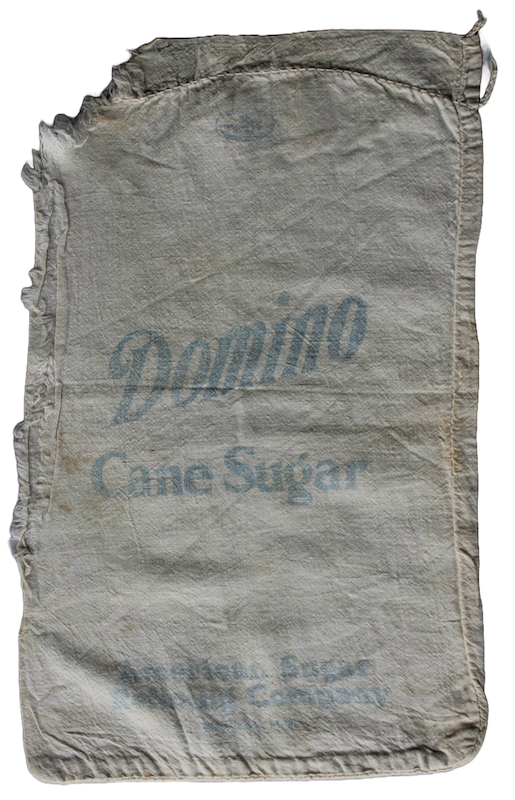
This towel is from Sullivan, Indiana. I found it in my aunt’s cupboard, in a box in 1953.
— Janet F.

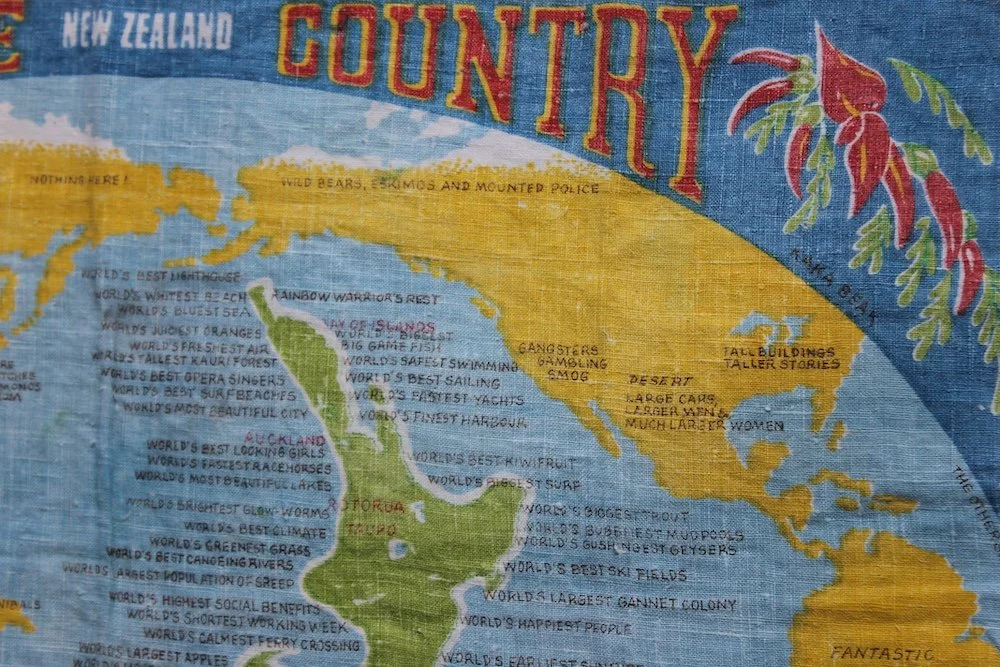
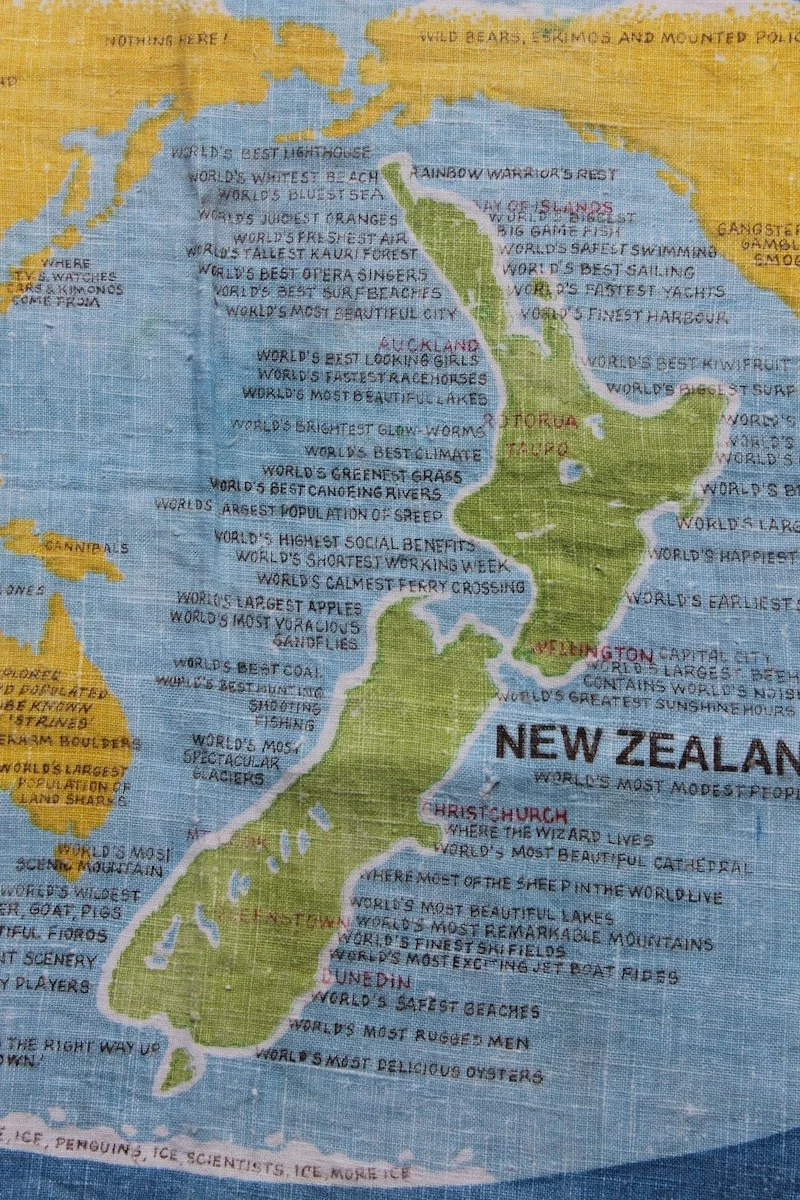
—Therese O.
Former Director of the Govett-Brewster Art Gallery, New Plymouth, New Zealand